
Air to Air Heat Pump vs Air-to-Water: Which Suits Your Home?
Air to air heat pump or air-to-water? Learn how they differ on heating, hot water, grants and costs, plus our Air Source Heat Pump Installation advice.
If you’re comparing heating options, you’ll come across two types of heat pump, and the names sound almost identical. An air to air heat pump warms your rooms by blowing warm air, while an air-to-water system heats water for radiators, underfloor heating and taps. At Eco Air Source Heat Pump Installer, we’re based in Walsall (WS1) and often explain this difference at the start of a home survey. The right choice affects your costs, your grant options and how much work happens inside your home.
How the two systems actually work
Both types take heat from outside air, even on cold days, and move it indoors. The difference is where that heat ends up.
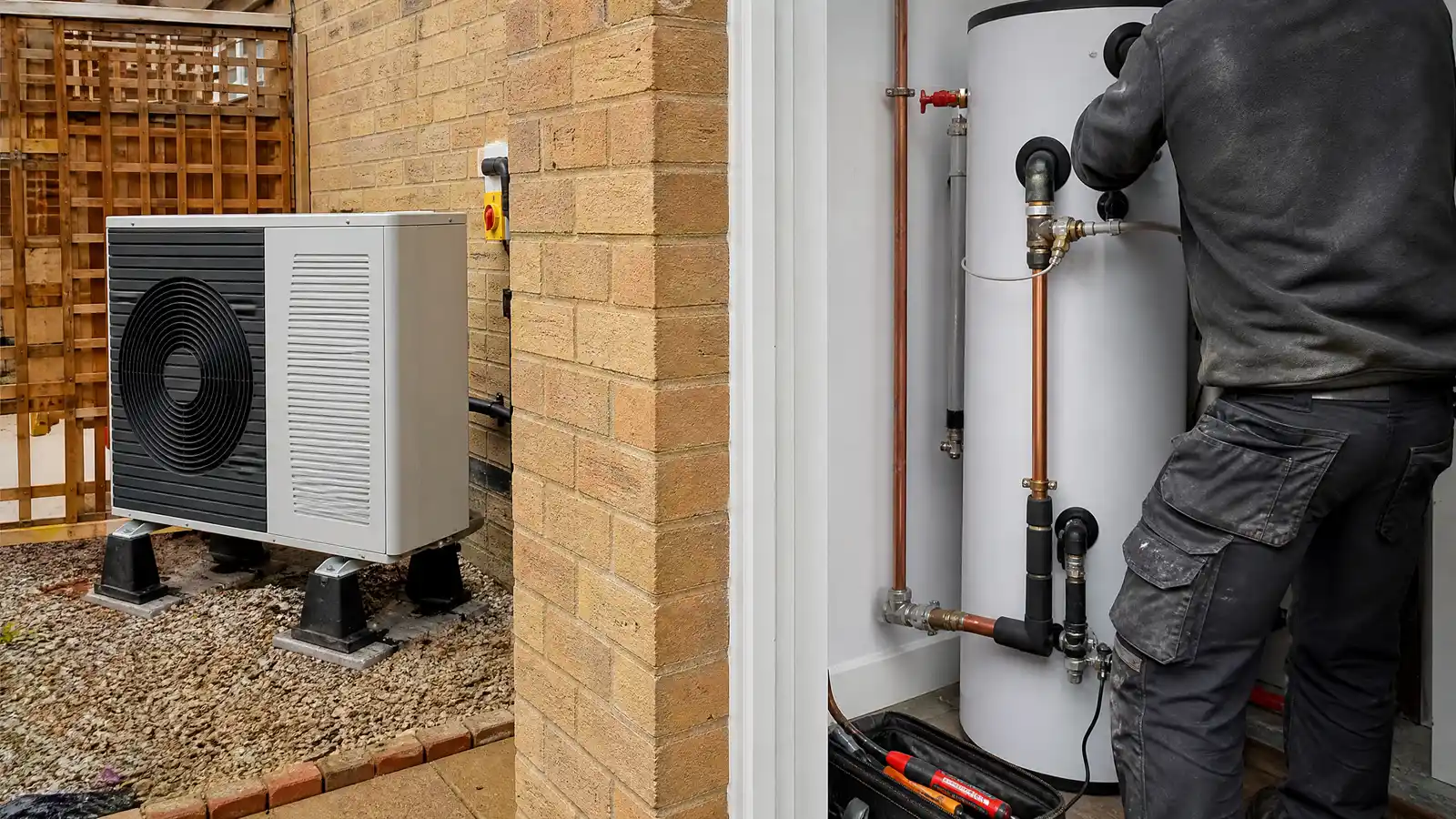
An air to air system uses an outdoor unit linked to one or more indoor units mounted on walls or ceilings. Warm air comes out of those units directly into the room. It’s similar in look to an air conditioner, and most models can also cool in summer. There are no pipes of hot water, no radiators and no cylinder.
An air-to-water system heats water instead. That water runs through radiators or underfloor heating and fills a hot water cylinder for your taps and shower. It’s the type designed to replace a gas, oil or LPG boiler and the one most people mean when they talk about a “heat pump”.
What this means for hot water and radiators
This is where most homeowners find the biggest practical gap.
An air to air heat pump heats rooms only. You’d still need a separate way to make hot water, such as an immersion heater, electric shower or your existing cylinder. Your old boiler and radiators don’t get used by it, so you’d end up running two systems unless you remove the boiler.
An air-to-water heat pump covers heating and hot water together. It does need a hot water cylinder, which the Energy Saving Trust says can usually fit in any cupboard measuring at least 80cm x 80cm (Energy Saving Trust, 2026). Some homes also need larger radiators so rooms warm properly at lower water temperatures. We check this at the survey and tell you plainly what’s needed, room by room.
Air-to-water systems also come as monobloc or split. The Energy Saving Trust notes monobloc units keep all components in one outdoor unit and are cheaper and quicker to install, while split systems can be slightly more efficient (Energy Saving Trust, 2026).
Costs, running costs and the grant
Price depends heavily on the type, the size of your home and the work involved. For a full air-to-water system, the Energy Saving Trust puts the typical UK installation cost at around £12,000 (Energy Saving Trust, 2026). Other guides give wider ranges: Checkatrade says £3,000 to £15,000 on average, not including extras such as upgrading radiators (Checkatrade, 2026), while Worcester Bosch says £5,000 to £15,000 (Worcester Bosch, 2026). The spread is wide because every house is different, which is why we give a written quote after a free home survey rather than guessing over the phone.
On running costs, the Energy Saving Trust says heat pumps are more than three times more efficient than a gas or oil boiler. However, on standard tariffs electricity is nearly four times more expensive than gas, so a heat pump can cost slightly more to run than a new boiler. A heat pump time-of-use tariff can bring running costs below a gas boiler (Energy Saving Trust, 2026).
On the grant, homes in England and Wales can get £7,500 towards an air source heat pump through the Boiler Upgrade Scheme (Energy Saving Trust, 2026). You must own the property and be replacing a fossil fuel system such as oil, gas, electric or LPG (GOV.UK, 2026). The grant is aimed at air-to-water systems, so an air to air heat pump isn’t covered. Please check GOV.UK for the official position. We aren’t MCS certified, so if you want the grant, we refer you to our MCS-certified partner, who quotes, installs and applies on your behalf. If you don’t need the grant, we install the heat pump ourselves.
Choosing between them
An air to air system can make sense for a single room, an extension or a home with no wet heating system. It’s less suited to replacing a boiler across the whole house. If you want to retire gas, oil or LPG heating completely, claim the grant and cover hot water, air-to-water is usually the better fit. Our air source heat pump installation page explains how that process works from survey to handover.
Key takeaways
- An air to air heat pump heats rooms with warm air; an air-to-water system heats radiators and hot water.
- Air to air doesn’t make hot water, so you’d still need another source.
- The Boiler Upgrade Scheme grant is aimed at air-to-water systems, and in our case it comes through our MCS-certified partner.
- Costs vary widely, so a written quote after a survey is the only reliable figure.
- Time-of-use tariffs can bring running costs below a gas boiler (Energy Saving Trust, 2026).


Frequently Asked Questions
Only partly. It heats rooms but doesn't produce hot water or feed radiators, so you'd still need another way to heat water. For a full boiler replacement, an air-to-water heat pump is normally the better option, and we can talk through both at your survey.
No, the Boiler Upgrade Scheme is aimed at air-to-water systems. For those, you must own the property and be replacing a fossil fuel system (GOV.UK, 2026). The grant comes through our MCS-certified partner, who quotes, installs and applies for you. Check GOV.UK for the official rules.
It depends on your home and tariff. Heat pumps are more than three times more efficient than a gas or oil boiler, but electricity costs nearly four times more than gas on standard tariffs (Energy Saving Trust, 2026). A time-of-use tariff can bring costs below a gas boiler. Call [01922 302461](tel:+441922302461) or request a free survey. We're open 7 days, 9am–7pm, and cover Walsall, Willenhall, Bloxwich, Aldridge and nearby areas. You're welcome to visit us, and we'll explain your options and give a written quote for [air source heat pump installation](/heat-pump-installation/air-source-heat-pump-installation/) with no pressure.
Thinking about an air source heat pump?
Call or send a message and we'll arrange a free survey of your home, then send a written quote.